CLOSURE OF PAPER MILL “DEVESTATING BLOW” - CAMPBELL

July 25th, 2008

In light of the recent news that Curtis Fine Papers, based in Guardbridge, have had to call in the administrators with the loss of up to 260 jobs, North East Fife Parliamentarians Sir Menzies Campbell MP and Iain Smith MSP have issued the following statement.

“This is a devastating blow for Guardbridge and the local economy the paper mill has been a major employer for over 100 years and it is deeply concerning that 180 jobs have been lost with immediate effect and another 80 threatened.

“We have contacted John Swinney’s Office to ask for an urgent meeting with the cabinet secretary to discuss what the Scottish Government can do to assist either in keeping the paper mill as a going concern or to assist in finding new jobs for our constituents.

“We will also be seeking an urgent meeting with the administrators KPMG to explore the prospects for salvaging jobs at the mill. Furthermore, we will also be seeking an early meeting with representatives of the work force and are ready to assist wherever possible.”

ENDS

CAMPBELL COMMENDS THE SKILL AND DEDICATION OF COASTGUARDS

July 24th, 2008

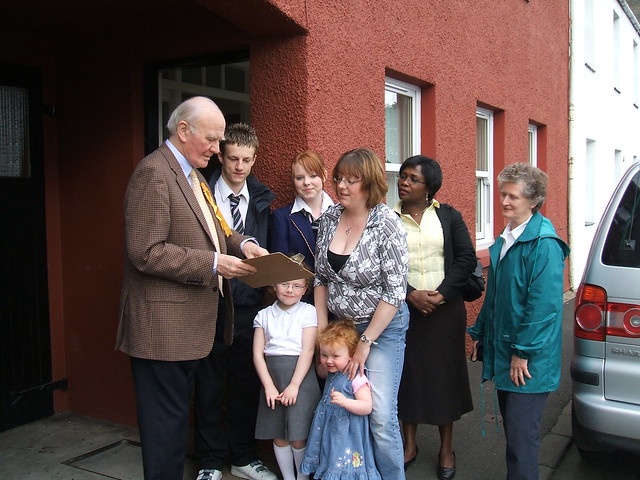
Ming Campbell at Forth Coastguard

North East Fife MP Sir Menzies Campbell today visited Forth Coastguard station at Fife Ness in the constituency to talk to staff about the vitally important work that they do for the fishing industry, shipping and leisure in the Forth coast area.

Sir Menzies has previously highlighted the importance of the services provided by the Coastguard during the course of a debate about the Coastguard Agency in House of Commons. He told his Parliamentary colleagues that for the fishing industry the availability of coastguard cover 365 days of the year was essential for safety and confidence.

Commenting after his visit Sir Menzies said, “The importance of the Coastguard service to all users of the coast and sea is clear. The job they do 365 days a year, round the clock is absolutely vital.

“The skill and dedication of Coastguard officers at Fife Ness, which I have seen today, is remarkable and my whole-hearted thanks go out to them for the vital job which they are doing.”

Menzies Campbell Opens Newly Refurbished Gateside Hall

June 26th, 2008

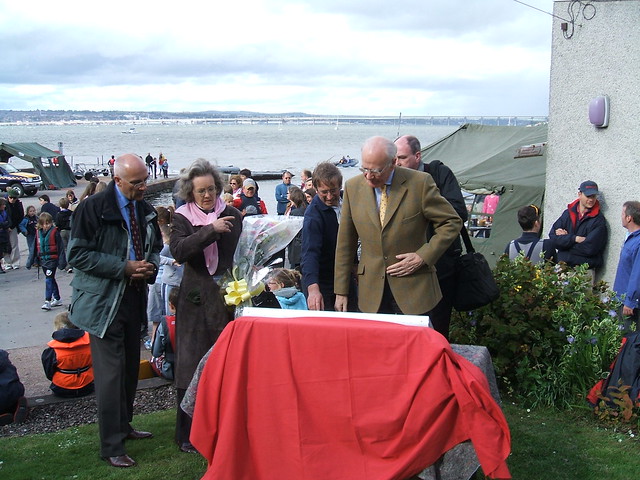
Ming opening Gateside Hall

North East Fife MP Sir Menzies Campbell formally opened the newly refurbished Gateside Memorial Hall on Sunday 22nd June.

CAMPBELL ATTACKS GOVERNMENTS “FULL SCALE OFFENSIVE” ON POST OFFICES

June 26th, 2008

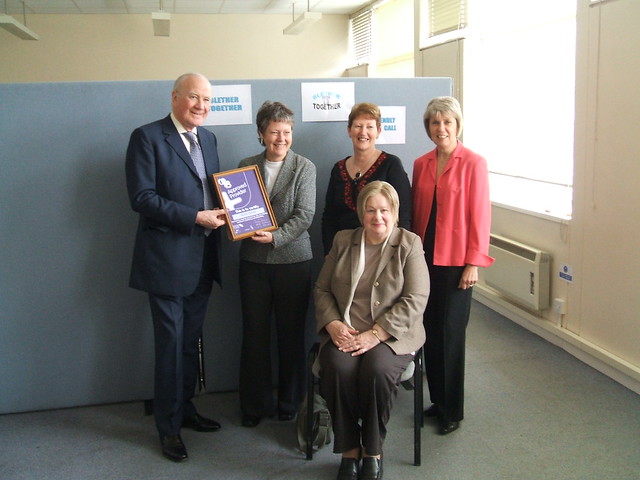
Ming at Post Office

North East Fife Liberal Democrats Sir Menzies Campbell MP and Iain Smith MSP have thrown their weight behind the campaign by the National Federation of Sub-Postmasters to save the Post Office card account (POCA2), which enables over 4 million people to access their pensions and benefits at a Post Office each week.

The current contract for providing pensions and benefits is due for renewal by the Government and Liberal Democrats are keen that the Post Office is awarded the new card account. The National Federation of Sub-Postmasters estimates that the loss of this service will result in 3000 more Post offices being forced to close.

This move, coupled with the current Post Office plans to close Post Offices in North East Fife, has been branded by Sir Menzies and Mr Smith as a “full scale offensive” on the vital service offered by the local Post Office.

Ming said:

“I have said it time and time again. Post Offices have a very important role to play in people’s lives. They are vital assets for many local people and any closure will cause inconvenience. Post Offices are also ideally placed to provide pensions and benefits.

“Liberal Democrats have vigorously opposed the Government’s plans to close 2,500 Post offices this year, on top of the 4,000 they have already closed, along with the 3,500 closed by the Conservatives. If pensions and benefits can no longer be obtained from Post Offices this would damage the PO network even more. This full scale offensive must be resisted.”

ENDS

Menzies Campbell’s Speech to Parliament in “42 Days” Debate

June 12th, 2008

Ming in Chamber

I shall vote against the Government—not because I am soft on terror or because I fail to recognise the seriousness of the threat, but because I believe that the Government’s proposals are profoundly mistaken, and that they are wrong in both principle and practice.

Much of what I might have said has already been eloquently expressed by my hon. Friend the Member for Eastleigh (Chris Huhne) and the right hon. Member for Haltemprice and Howden (David Davis). In approaching this matter, we all have a responsibility to show independent judgment, and we must exercise that judgment in striking a balance between the competing interests of security and individual freedom. If I have a criticism of the debate so far, it is that the second of these interests has formed a smaller part of our proceedings than I would have wished.

When I look across at the Labour Benches, I am reminded that for a long time Labour Members voted against the renewal of prevention of terrorism legislation so far as it applied to Northern Ireland. In 1987, after I was elected, I participated in the votes on that. In those days, Labour voted against, but then, lo, there came out of the north-east a new young shadow Home Secretary from the constituency of Sedgefield, and he persuaded his party that instead of voting against, abstention would be sufficient. My point is that Labour Members did all that through exercising their independent judgment, and we too must exercise that when the matter currently under discussion goes to the vote. My objection to the Government position has been echoed by many Members in our debate: they have simply failed to prove the case at this time for the extension of the period of detention that they seek.

I do not rely on the judgments of others. That is a kind of political card game: “You play your Lord Stevens, and I’ll play my Lord Falconer, and what did Lord Goldsmith have to say about this?”—or Lord Carlile, for that matter. Such judgments may be persuasive, but they are by no means determinative of the positions we must take.

I would have had more respect for the Government if they had been willing to put their case simply, frankly and bluntly. I am not against consultation, but the scurrying around of the last few days and weeks has been demeaning to the Government, and also to Parliament. Compensation for miners is, no doubt, an extremely important issue, as is raising the economic blockade of Cuba, but what the devil have they got to do with the prevention of terrorism in the United Kingdom? Also, from where have come the allegations of Danegeld for the Democratic Unionist party? I hope that none of these stories is true; I hope that they are all the product of fevered imaginations. However, if they are part of what is necessary for the Government to have their legislation, I suspect that they are not a price worth paying.

I will vote against the Government because any time any Government seek to diminish the freedoms that are the cornerstone of our system, it is our duty collectively and individually to hold that Government to account and to subject them to the most rigorous scrutiny. That duty transcends all our other responsibilities; it is our primary duty. It is the constitutional reason why we are sent to this place, and, if I may be excused sounding somewhat flippant, I should say that it has nothing to do with the communications allowance, nothing to do with how many prepaid envelopes we use, and nothing to do with seeking to be regarded as the constituency MP of the year. Our job is to hold the Government to account and to scrutinise them as rigorously as we can. When what they are seeking to do interferes with the liberty of the citizen, that duty is even more important than it normally is.

That duty transcends the credibility, and even the survival, of the Prime Minister. This debate and the vote that we will have in due course should not be about whether he is strengthened or weakened, because the issue is whether the rights of our citizens are strengthened or weakened by what we do in this place. I shall vote against the Government, because I think that the so-called concessions are—to use less elegant language than the Joint Committee on Human Rights did—political boiler plate.
The concessions leave far too much to the discretion of the Home Secretary, they are—as the hon. and learned Member for Beaconsfield (Mr. Grieve) has pointed out in several telling interventions—complicated to the point of incomprehensibility and ambiguity, and they blur the distinction between the responsibility of Parliament and the administration of justice. If we make a judgment that it is necessary to introduce the reserve power, and if that judgment is based on the circumstances surrounding an individual case, we inevitably become engaged in the administration of justice. The inferences that may be drawn from either a willingness or an unwillingness to accept the Government’s case could be substantial in the subsequent disposal of the case against that person. I have searched my memory, and searched elsewhere, but I can think of no other instance when the House of the Commons has been called on to pass legislation based on individual circumstances after criminal proceedings have been commenced against an individual. If that is not a novel constitutional doctrine, I do not know what is.

If we want to defeat the terrorists, we have to defeat not only their wish to blow up buildings, but their wish to damage and undermine the very freedoms upon which our system is based.

The Home Secretary gave the game away earlier today when she said, “Trust me.” Of course one starts with a presumption in favour of trusting the Home Secretary, but such trust has not always been justified in every Home Secretary who has occupied that Front-Bench post since I first entered this House, and it is not likely to be justified in every future case. Parliament can exercise an informed judgment only if the information is put before it. If the information is put before Parliament in sufficient quantity, and it is of sufficient quality to enable it to exercise that judgment, that raises precisely the point that the hon. Gentleman makes: that the prejudice to the individual may be overwhelming.

Once freedoms of the kind that we are debating are removed or even diminished, they are not easily recovered. We should never imagine that what we now take for granted was handed out by benevolent monarchs or by altruistic Governments. They were won. Sometimes they had to be seized physically, and sometimes they could be seized by political or other methods. But they had to be acquired, because the natural acquisitiveness of the Executive means that it takes power to itself as often as it can. If we give the power back, how difficult will it be to restore the freedoms and the personal liberty that we regard as so important?

It is not right to legislate on the basis of what might be. It is much less right to legislate on the basis of what might be when that involves an attack on freedom and liberty. The reason why I was a little disparaging about Stevens, Falconer, Goldsmith and Carlile was that we should not be moved by the opinions of others. On an issue of this kind, we should be moved by our own judgment, and that is why I will vote against the Government.